The Timeless Art of Persian Carpet Weaving: A 2,500-Year Heritage
Persian carpets represent one of the most distinguished forms of Iranian art and craftsmanship, with a heritage spanning over 2,500 years. Recognized by UNESCO as an Intangible Cultural Heritage of Humanity, these handwoven masterpieces are not merely floor coverings but intricate works of art that tell stories of Persian culture, history, and spirituality. Each carpet embodies the weaver's skill, regional traditions, and symbolic meanings that have been passed down through generations of Iranian artisans.
What distinguishes authentic Persian carpets is their unparalleled combination of artistic expression and technical mastery. Unlike mass-produced alternatives, genuine Persian carpets are created using techniques perfected over centuries, with each piece representing months or even years of dedicated labor. The value of these carpets extends beyond their material worth - they are investments in cultural heritage, artistic expression, and traditional craftsmanship that appreciates over time.
Master weaver creating an authentic Persian carpet in Isfahan workshop - showcasing traditional hand-knotting techniques passed down through generations
Essential Characteristics of Authentic Persian Carpets
When evaluating a Persian carpet for authenticity and quality, these fundamental characteristics are non-negotiable indicators of genuine craftsmanship:
- Hand-knotted Construction: Each individual knot is tied by hand using traditional techniques. Machine-made carpets lack the character and value of hand-knotted pieces.
- Natural Materials: Authentic Persian carpets use 100% natural materials - high-quality wool from specific Iranian sheep breeds, pure silk from Qom or Kashan, and cotton for foundation. Synthetic materials significantly reduce value.
- Persian (Senneh) Knots: Authentic Persian carpets use asymmetrical knots open to the left, distinguishing them from Turkish (Ghiordes) knots which are symmetrical.
- Natural Vegetable Dyes: Traditional dyes from plants, insects, and minerals create subtle color variations that artificial dyes cannot replicate. Natural dyes improve with age.
- Intentional Imperfections: Small irregularities in pattern alignment or knotting demonstrate human craftsmanship and distinguish handwoven from machine-made carpets.
- Symbolic Design Elements: Traditional patterns carry specific meanings - the boteh (paisley) represents eternity, the gul (flower) symbolizes gardens of paradise.
- Weaver's Signature: Many authentic carpets include the weaver's signature, workshop mark, or date woven in Persian script along the edge.
Comprehensive Guide to Persian Carpet Types and Regional Styles
Iran's diverse regions produce distinct carpet styles, each with unique characteristics, designs, and weaving traditions. Understanding these regional differences is essential for making informed purchases.
| Type/Region | Origin & History | Characteristics & Design | Materials Used | Price Range (per m²) | Investment Potential |
|---|---|---|---|---|---|
| Tabriz Carpets | Northwest Iran, 15th century origin, historical trade center | Central medallion with intricate floral designs, high knot density (400-800 KPSI), curvilinear patterns | Wool pile on cotton foundation, sometimes silk highlights | $800 - $4,000 | High - Appreciates 5-8% annually |
| Isfahan Carpets | Central Iran, Safavid dynasty peak (16th-17th century), royal workshops | Elegant curvilinear designs, central Shah Abbas medallion, intricate floral patterns, silk highlights | High-quality wool or silk pile on cotton/silk foundation | $1,200 - $6,000+ | Very High - Collectible status |
| Kashan Carpets | Central Iran, 16th century, traditional weaving families | Central medallion with arabesque designs, deep red/blue backgrounds, elegant borders | Fine wool pile on cotton foundation | $700 - $3,500 | High - Stable appreciation |
| Heriz Carpets | Northwest Iran, 19th century, tribal weaving tradition | Geometric designs, large central medallion, bold colors, highly durable | Thick wool pile on cotton foundation | $400 - $1,800 | Medium - Good value retention |
| Qom Silk Carpets | Central Iran, 20th century, religious center | Extremely fine details, intricate pictorial designs, luminous colors | 100% silk pile on silk foundation | $3,000 - $15,000+ | Very High - Luxury collectible |
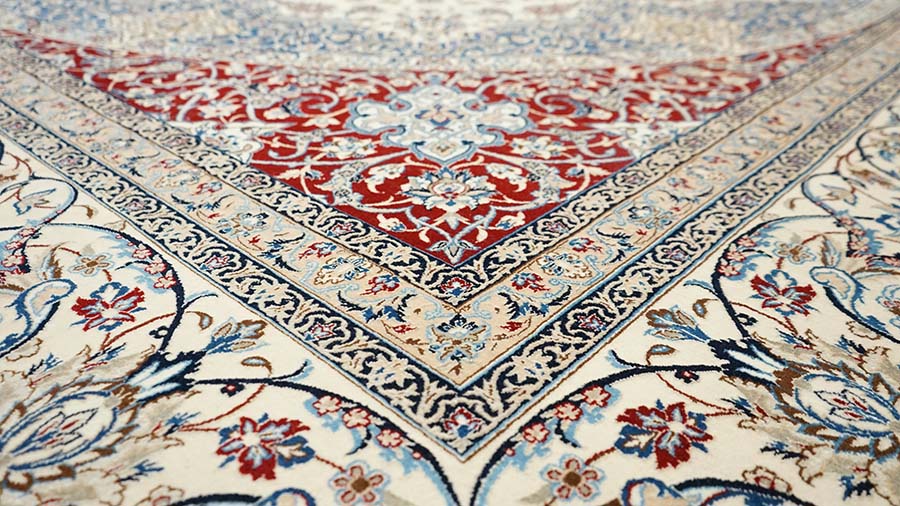
| Nain Carpets | Central Iran, 1930s origin, fine weaving tradition | Delicate designs, ivory backgrounds, silk highlights, extremely fine knotting | Wool pile with silk highlights on cotton foundation | $900 - $5,000 | High - Investment grade |
| Kerman Carpets | Southeast Iran, 16th century, famous for vase designs | Vase designs, floral patterns, pastel colors, elegant aesthetics | Fine wool pile on cotton foundation | $600 - $3,000 | Medium-High - Good appreciation |
How to Identify Fake or Counterfeit Persian Carpets
With Persian carpets commanding premium prices, counterfeit production has become sophisticated. Protect your investment with these expert authentication techniques:
Visual and Tactile Inspection Methods
- Back Examination: Turn the carpet over. Genuine hand-knotted carpets show individual knots on the back. Machine-made carpets have uniform, glued backing.
- Knot Type Verification: Examine knots closely. Persian (Senneh) knots are asymmetrical and open to the left. Turkish (Ghiordes) knots are symmetrical.
- Fringe Inspection: Authentic carpets have fringes that are extensions of the warp threads. Glued or sewn-on fringes indicate machine production.
- Material Testing: Burn test a few fibers (with permission). Wool smells like burning hair, silk smells like burning protein, synthetics melt and smell chemical.
Quality and Authenticity Red Flags
- Unrealistic Pricing: Authentic Persian carpets require months/years of labor. Suspiciously low prices indicate synthetic materials, machine production, or counterfeit origin.
- Perfect Symmetry: Machine-made carpets have perfect symmetry. Handwoven carpets have slight variations that prove human craftsmanship.
- Chemical Odors: Artificial dyes and synthetic materials often have chemical smells. Natural materials and dyes have earthy, organic scents.
- Wrong Origin Claims: Many "Persian" carpets are actually made in Pakistan, India, or China. Verify origin through certification and dealer reputation.
- Missing Documentation: Authentic carpets from reputable dealers come with certificates of authenticity, origin verification, and care instructions.
Comprehensive Quality Assessment Guide
Evaluating Persian carpet quality requires understanding multiple technical and aesthetic factors. Follow this systematic assessment approach:
Technical Quality Metrics
- Knot Density Measurement: Count knots per square inch (KPSI). Higher KPSI indicates finer work: 80-120 (good), 120-300 (very good), 300-600 (excellent), 600+ (masterpiece).
- Material Quality Assessment: Wool should be springy and resilient, silk should have natural luster. Synthetic fibers feel plastic-like and lack natural texture.
- Dye Quality Testing: Rub a white cloth dampened with alcohol on an inconspicuous area. Color transfer indicates unstable artificial dyes.
- Structural Integrity Check: Bend the carpet - it should spring back quickly. Sagging indicates poor foundation or worn materials.
- Edge and Selvage Examination: Edges should be tightly bound. Loose or frayed edges indicate poor construction or wear.
Aesthetic and Artistic Evaluation
- Design Harmony: Patterns should be balanced and proportional. Cluttered or unbalanced designs indicate lower artistic quality.
- Color Harmony: Colors should complement each other naturally. Harsh or clashing colors may indicate artificial dyes.
- Pattern Clarity: Designs should be sharp and well-defined, especially in high-knot-density areas.
- Age and Patina: Genuine antique carpets develop a desirable patina. Beware of artificially aged carpets with uneven wear patterns.
- Provenance Verification: Established provenance increases value. Look for workshop marks, weaver signatures, or historical documentation.
Persian Carpet Investment and Value Appreciation
High-quality Persian carpets are not just decorative items but solid investments that typically appreciate 5-10% annually. Consider these investment factors:
- Age Category Classification: Antique (100+ years), Semi-antique (50-100 years), Vintage (25-50 years), Contemporary (less than 25 years). Older carpets generally appreciate faster.
- Regional Rarity: Certain regions produce limited quantities. Qom silk carpets and fine Isfahan pieces have higher investment potential.
- Condition Factors: Carpets in original condition with minimal restoration retain higher value. Extensive repairs or recoloring reduces value.
- Market Demand Trends: Certain styles have consistent international demand. Tabriz and Isfahan carpets have strong global markets.
- Documentation Value: Carpets with verifiable provenance, exhibition history, or publication references command premium prices.
- Size Considerations: Medium-sized carpets (2x3m to 3x4m) have the broadest market appeal and liquidity.
Professional Care and Maintenance Guidelines
Proper care ensures your Persian carpet maintains its beauty and value for generations. Follow these expert maintenance protocols:
Routine Maintenance
- Regular Rotation: Rotate 180 degrees every 6-12 months to ensure even wear and sun exposure.
- Proper Vacuuming: Use vacuum without beater bar weekly. Vacuum in direction of pile to avoid damaging fibers.
- Immediate Spill Response: Blot (don't rub) spills immediately with clean, white cloths. For stubborn stains, use specialized wool/silk cleaners only.
- Sunlight Protection: Limit direct sunlight exposure to prevent fading. Use UV-protective window films if necessary.
- Humidity Control: Maintain 40-60% humidity. Excessive dryness causes brittleness; high humidity promotes mold.
Professional Care Schedule
- Professional Cleaning: Every 3-5 years by certified Persian carpet specialists using appropriate techniques.
- Condition Assessment: Annual professional inspection to identify early signs of wear or damage.
- Restoration Timing: Address minor repairs immediately to prevent worsening. Major restoration should be done by specialists.
- Storage Protocol: Store rolled (never folded) with acid-free paper, in climate-controlled environments away from pests.
Where to Buy Authentic Persian Carpets with Confidence
Ensure authenticity and fair pricing by purchasing from these recommended sources:
- Certified Dealers: Establishments with International Persian Carpet Association (IPCA) certification or similar credentials.
- Direct Workshop Purchases: Buying directly from weaving workshops in Isfahan, Tabriz, or Kashan ensures authenticity and supports artisans.
- Reputable Auction Houses: Sotheby's, Christie's, and Bonhams provide provenance verification and quality guarantees.
- Specialized Persian Carpet Stores: Establishments with multi-generation expertise and restoration services.
- Trusted Online Platforms: Reputable e-commerce sites with comprehensive authentication, detailed documentation, and return policies.
Related Iranian Handicrafts and Luxury Products
If you appreciate Persian carpet artistry, explore these other premium Iranian handicrafts and luxury products:
- Iranian Handicrafts - Traditional Persian arts including metalwork, woodwork, and miniature painting
- Persian Ceramics - Traditional pottery and tilework with intricate blue patterns
- Turquoise Jewelry - Handcrafted jewelry featuring Iran's famous Neyshabur turquoise
- Persian Miniature Paintings - Intricate traditional paintings on ivory or paper
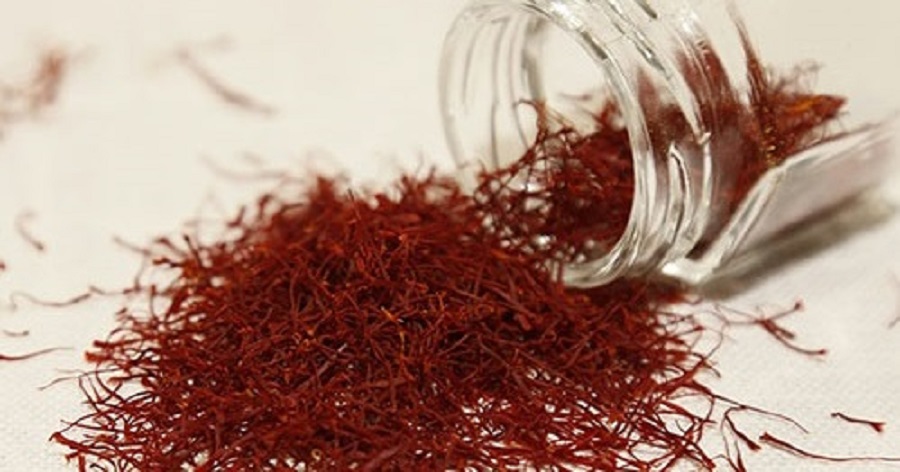
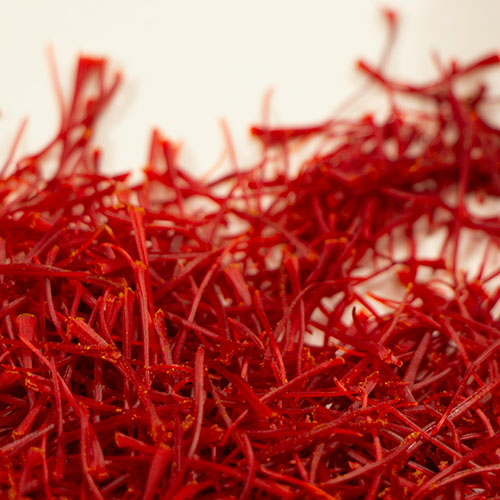
- Persian Saffron - The world's most precious spice, another iconic Iranian export
- Persian Caviar - Luxury Caspian Sea caviar, representing Iran's gourmet excellence
Frequently Asked Questions About Persian Carpets
Check the fringes: Authentic fringes are extensions of warp threads. Machine-made often have sewn-on fringes.
Look for imperfections: Handmade carpets have slight pattern variations proving human craftsmanship.
Feel the texture: Hand-knotted carpets have springy, resilient texture. Machine-made feel stiff and uniform.
Price indication: Authentic hand-knotted carpets require significant labor and command appropriate prices.
Turkish (Ghiordes) Knots: Symmetrical knots that wrap around two warp threads equally. This creates bolder, more geometric patterns typical of Turkish and some Caucasian carpets. While both are hand-knotted techniques, Persian knots allow greater artistic expression and detail complexity.
Spill Response: Blot immediately (never rub), use clean white cloths, for stubborn stains consult specialists.
Professional Cleaning: Every 3-5 years by certified Persian carpet experts using appropriate techniques.
Storage: Roll (never fold) with acid-free paper, store in climate-controlled environments.
Repairs: Address minor damage immediately through certified restoration specialists.
Avoid home steam cleaning, harsh chemicals, or amateur restoration attempts that can permanently damage valuable carpets.
Expert Carpet Buying Tips
- Natural Light Inspection: Always examine carpets in natural light to accurately assess colors and detect artificial dyes
- Multiple Viewing Angles: View from different angles and distances to appreciate design complexity and identify flaws
- Comparative Shopping: Compare similar pieces from multiple dealers to understand fair market pricing
- Document Everything: Request and retain all documentation including certificates, provenance, and care instructions
- Trust Your Senses: Authentic Persian carpets feel resilient, smell natural (wool/vegetable dyes), and display artistic harmony
- Patience Pays: Take time to find the perfect piece - rushing often leads to overpaying or purchasing lower quality
By following this comprehensive guide, you'll be equipped to navigate the Persian carpet market with confidence, make informed purchasing decisions, and build a collection that represents both artistic appreciation and sound investment. Whether you're seeking your first Persian carpet or adding to an established collection, understanding these principles ensures you acquire authentic pieces that will bring beauty and value for generations to come.



Collector Experiences (0)
Share Your Persian Carpet Experience